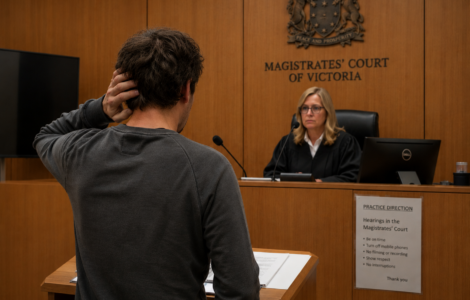
What Happens After a DUI Charge in Victoria – Step-by-Step Timeline
 Apr 14, 2026
 Amalia Vicze

If you’ve just been charged with a DUI or drink driving offence in Victoria, the waiting is often the worst part.
Most people leave the police stop or station thinking:
“What happens now?”
“Have I already lost my licence?”
“When do I go to court?”
“What am I meant to do before then?”
This page walks through what usually happens after a DUI charge in Victoria, step by step, in the order it normally unfolds. The process is more structured than it feels right now.
Step 1: Getting Pulled Over and Charged
The process starts when police stop you and conduct a breath test or assessment.
This might involve:
- a roadside breath test
- a further breath test on an evidentiary machine
- or, in some cases, a blood test
If police believe you were over the limit or so affected by alcohol or drugs that you could not properly control the car, you will be charged.
You may be charged with:
- exceeding the legal BAC, or
- DUI (driving under the influence), which is more serious
Police will give you paperwork. This usually includes:
- the printout of the BAC test. It looks like a shopping receipt
- information about your licence
At this point, the case has started, even though court may be weeks away.
Step 2: Immediate Licence Suspension (If Applicable)
In some cases, police can suspend your licence immediately.
This often happens when:
- your BAC is high or it’s over 0.1
- you are a learner or P-plater
- it is a repeat offence
- you refused a breath or blood test
If police suspended your licence on the spot, you must stop driving straight away.
There is no grace period.
Driving now can turn a drink driving case into a much more serious situation involving extra charges.
Some immediate suspensions can be challenged, but strict time limits apply. Get advice quickly if this applies to you.
Step 3: Receiving Your Court Date
After the charge, you will receive a court date. This is a document called a Charge sheet and Summons.
This may be:
- handed to you by police
- sent by mail
- or issued electronically
The court date is usually several weeks or months after the breath test.
This delay is normal.
The first date is often a mention, not a full hearing.
If this is your first offence, this guide here explains how those cases usually start.
Step 4: Preparing for Court – What You Need to Know
This is where many people either help or hurt their own case.
Before court, you should:
- understand exactly what charge you face
- know whether your licence is already suspended
- decide whether you will plead guilty or not guilty
If you plan to plead guilty, preparation matters.
Courts look closely at:
- whether you accept responsibility
- whether you understand the risk you caused
- what you have done since the offence
Helpful preparation can include:
- arranging character references
- starting counselling or alcohol education
- understanding licence and interlock requirements
Leaving everything until the court date often leads to harsher outcomes. If you’re unsure how court actually works, this explains the process step by step:
Step 5: Going to Court – What Happens on the Day
On the court day, your matter will be called before a magistrate. If you have a lawyer, you do not have to speak.
If you plead guilty, the usual order is:
- the police prosecutor reads the facts
- the court is told your BAC and driving history
- you or your lawyer speak in mitigation
- the magistrate decides the penalty
The magistrate may ask you questions, especially if:
- this is your first offence
- you are self-represented
- there are concerns about alcohol use
If you plead not guilty, the matter is usually adjourned for a contested hearing on another date.
Most drink driving cases resolve by a guilty plea because the evidence is often clear. Not guilty pleas are usually based on technical or legal issues.
Step 6: Possible Outcomes and Penalties
If you are found guilty, the court must impose certain penalties.
These usually include:
- licence cancellation and disqualification
- a fine or other sentencing order
- an alcohol interlock condition before relicensing
- completion of a Behaviour Change Program
The severity depends on:
- your BAC
- whether it is a first or repeat offence
- whether there was a crash or dangerous driving
- whether you refused testing
Jail is not common for first offences with moderate readings and no aggravating features. It becomes a real risk in repeat or very serious cases.
For examples of how courts deal with real cases, see our case studies here.
Step 7: Getting Legal Help – When and Why to Do It
You do not have to wait until court to get help.
In fact, the earlier you get advice, the more options you usually have.
A lawyer can:
- explain what outcome is realistic in your case
- tell you if jail is actually a risk
- advise what preparation will help
- make sure you don’t make things worse by mistake
- represent you in court if needed
A lawyer cannot promise a result. But they can help you avoid unnecessary damage.
Final word.
Every DUI case in Victoria follows a general timeline. The steps are predictable, even if the situation feels overwhelming.
What changes outcomes is not panic.
It’s preparation.
Every drink drive case follows a timeline — but the outcome depends on how you prepare. Speak to a lawyer before court.
Other Blogs

-
 Repeat Drink Driving Offence – Is There Any Hope in Court?
If you’ve been caught drink driving again, it can feel like the ground has dropped out from under you. Most people at this point aren’t asking about fines. They’re thinking: “It’s over.”“They won’t go easy on me this time.”“I’m going to jail.” That sense of hopelessness is common. And it’s understandable. But here’s the truth, based […]
 August 10, 2026Read more
-
Should I Represent Myself in Court?
At the outset, the reader may find it ironic to find this article published on a Law Firms website that charges for professional services. However, what follows is, so to speak, the truth, the whole truth and nothing but the truth when it comes to the decision to represent yourself in court. It doesn’t matter […]
Michael Sunderland
May 11, 2026Read more -
First Time Drink Driving Charge in Victoria – What You Need to Know
If you’ve been caught drink driving in Victoria for the first time, you’re probably feeling rattled. Most people in this position are thinking the same things: “Am I going to court?”“Do I lose my licence straight away?”“Will this ruin my job or future?” That reaction is normal. A first time drink driving charge in Victoria is serious. But it […]
Amalia Vicze
May 8, 2026Read more -
How to Get Your Licence Back After Being Caught and Disqualified in Victoria
You cannot just start driving when your disqualification period ends. Once a court cancels your licence, it is completely void. You must officially apply to VicRoads to get a new licence. Depending on your offence, you might also have to go back to the Magistrates’ Court first to get a “licence eligibility order”. Over 90% […]
Amalia Vicze
April 15, 2026Read more -
The Dangers of AI and The Law
Since the introduction of AI Large Language Models (LLMs) in the early 2020s, people have increasingly relied on AI platforms such as ChatGPT and Google Gemini to assist with day-to-day tasks, from drafting emails to summarising complex information. By 2026, it is widely understood that while these tools are powerful, they are not infallible. One […]
Michael Sunderland
April 10, 2026Read more

 August 10, 2026