



DUI – Driving Under the Influence | s49(1)(a) Road Safety Act Victoria
 Mar 27, 2026
 Amalia Vicze & Michael Sunderland


If you’ve been charged with DUI, you’re probably scared. Most people are. This charge feels heavier than a normal drink driving charge. It often comes with words like “incapable”, “court”, “criminal record”, and sometimes “jail”.
You might also be confused because you did not “blow high”, or you were not even given a breath test at the roadside. That happens in DUI cases. DUI is not just about a number. It is about whether police say you were so affected by alcohol or drugs that you could not properly control the car.
This page explains what DUI means in Victoria, what police have to prove, what penalties can apply, and what you can do now to protect your licence and your future.
What Is a DUI Charge in Victoria?
In Victoria, DUI usually means a charge under section 49(1)(a) of the Road Safety Act 1986. The allegation is that you drove, or were in charge of, a motor vehicle while under the influence of alcohol or drugs to the extent you were incapable of having proper control of the vehicle.
That last part is the key. “Incapable of proper control” is what makes DUI different.
A lot of people mix up DUI with “being over the limit”. They are not the same thing.
If you are charged with exceeding the legal BAC limit, the prosecution relies mainly on a breath or blood reading. If you are charged with DUI, the prosecution is saying your impairment was so serious you could not safely control the vehicle, even if the BAC reading is not the main focus.
That is why DUI is treated as one of the more serious drink driving charges.
Key Elements of a DUI Offence
For a DUI charge under s49(1)(a), the prosecution must prove all of these things beyond reasonable doubt.
They must prove you were driving, or you were “in charge” of a motor vehicle. “In charge” can mean you were in a position to control the vehicle, even if you were not moving. For example, being in the driver’s seat with the keys can sometimes be enough, depending on the circumstances.
They must prove you had alcohol or drugs in your system.
They must prove you were incapable of having proper control of the vehicle.
They must prove that the incapacity was caused by the alcohol or drugs, not by something else.
If the prosecution cannot prove any one of these points, the charge should not succeed.
Proving Incapacity to Drive Safely
This is where DUI cases are usually won or lost.
The prosecution does not just need to show you had been drinking or had taken something. They need to show you were actually incapable of proper control.
In real life, police usually rely on a mix of evidence, such as the way you were driving, what you said, how you looked, how you walked, your speech, your balance, and what you did at the scene. They may also rely on witness statements, CCTV, and police body-worn camera footage.
They may also rely on tests. That could include breath testing, blood testing, oral fluid testing, urine testing, or a drug assessment. Sometimes an expert opinion is used to explain how a certain alcohol level or drug level can affect driving.
One important point is this. The prosecution must prove that you personally were incapable of proper control. It is not enough to say “people with that BAC are usually impaired”. The court looks at the whole picture.
This is why a DUI charge can sometimes be defended even where there was alcohol involved. It depends on the facts, the evidence quality, and whether the prosecution can meet the legal test.
Penalties for a DUI Offence
DUI carries real penalties. But it is still important to separate what can happen from what usually happens.
What can happen depends on whether it is a first offence or a repeat offence.
For a first offence, the law allows a fine of up to 25 penalty units or up to 3 months imprisonment.
For a second offence, the law allows a fine of up to 120 penalty units or up to 12 months imprisonment.
For a third or later offence, the law allows a fine of up to 180 penalty units or up to 18 months imprisonment.
Those are maximums. They are not automatic outcomes. Most first offence DUI cases do not end in jail. But jail is available to the court. That is one reason this charge feels so serious.
There is also licence loss. For many people, that is the biggest problem.
If you are found guilty of DUI, the court will cancel your licence and disqualify you for a minimum period. The minimum disqualification periods are set out in the legislation.
For a first offence, the minimum is 2 years.
For any subsequent offence, the minimum is 4 years.
These minimums are strict. Once they apply, the court cannot go below them.
This is why your approach to the case matters early. It is also why the difference between charges can matter, and why conviction issues can matter in some situations.
Alcohol Interlock and Behaviour Change Program
Many people worry about what happens after the disqualification. They want to know how they get back on the road.
With many drink driving outcomes in Victoria, getting your licence back involves an alcohol interlock. An interlock is a breath-testing device fitted to your car. You have to blow into it to start the car. If alcohol is detected, the car will not start.
An interlock is not just a one-off cost. It usually involves installation fees, monthly monitoring, and removal fees. That financial impact catches people out.
Some people also have to complete a behaviour change program before re-licensing. These programs are about reducing the risk of it happening again. Whether you have to do one can depend on your history and what VicRoads requires.
The practical takeaway is simple. DUI often has long tail consequences. It is not just the day in court. It affects how and when you can drive again.
If you want broader information about drink driving matters and how they are handled, start here:
Vehicle Seizure and Impoundment – Does It Apply?
People often ask, “Can police take my car?”
For DUI under s49(1)(a) alone, police seizure and impoundment powers do not always operate the way people assume. In many cases, police do not seize a vehicle only because of a DUI charge.
But there is a catch. Police often lay more than one charge. If you are also charged with exceeding the prescribed concentration of alcohol (PCA) under s49(1)(b), that can change what powers are available.
So the right question is not “Can they impound a DUI car?” The right question is “What charges have been laid, and what powers attach to those charges?”
Facing Multiple Drink Driving Charges
It is common for police to lay multiple drink driving charges from the same incident. For example, a person might be charged with DUI and also with PCA.
This can be confusing, but it is not unusual. Different charges have different elements. Police may lay alternatives because they are not sure which one will be easier to prove, or because they believe more than one applies.
This is also where legal strategy matters. Sometimes a case can be resolved on a different charge that carries less risk. Sometimes it cannot. It depends on the evidence and the person’s history.
Where Will Your DUI Case Be Heard?
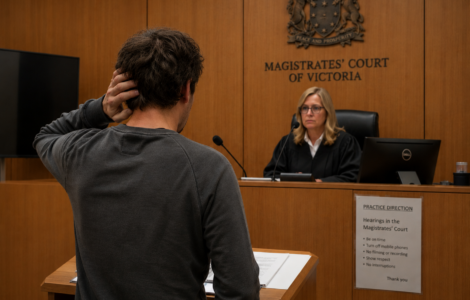
DUI charges are heard in the Magistrates’ Court.
Most DUI cases follow a similar path. You will be given a court date. You may have one or more mentions, where the case is listed and managed. If you contest the charge, the matter can be set down for a contested hearing. If you plead guilty, the matter proceeds to a plea and sentence.
If you have never been to court before, the uncertainty is stressful. Knowing the steps helps. This guide explains the usual process in Victoria: What Happens in Court for Driving Offences in Victoria? (Step-by-Step Guide)
Possible DUI Defences
Not every DUI charge is defensible. But many people assume they have no chance, when in fact the evidence has gaps.
Common defence issues include whether police can prove incapacity, whether the observations are reliable, whether the driving actually showed loss of control, and whether the impairment was caused by alcohol or drugs rather than something else.
Another issue can be proof. DUI is not just “you drank” or “you used something”. The prosecution has to connect the alcohol or drugs to actual incapacity.
There can also be issues with testing and procedure. For example, how and when samples were taken, what the results mean, and whether expert evidence is needed to interpret those results.
It can also matter whether police had proper grounds for the stop and the investigation steps that followed. That does not automatically end a case, but it can be important depending on what occurred.
If you are considering contesting a DUI charge, early advice matters. Once you make admissions or lock in a version of events, it is hard to unwind later.
Why You Need an Experienced Traffic Lawyer
A DUI charge is not a formality. It is a criminal offence with real consequences.
An experienced traffic lawyer can help you in three main ways.
First, by working out whether the charge is actually provable. DUI cases often rely heavily on police observations. Those observations can be challenged. Footage can change the picture. Medical issues can matter. Timing can matter.
Second, by helping you make smart decisions early. That includes how you respond to police, how you approach the brief of evidence, and whether a negotiated outcome is possible.
Third, if you plead guilty, by preparing the case properly for sentencing. That means showing the court what it needs to see to reduce the penalty as much as the law allows. It can include steps taken early, counselling, treatment, and properly prepared references. It also means focusing on the licence impact, because for many people, that is the hardest part.
If your case also involves refusing a test allegation, this may be relevant: Refusing a Breath Test
Speak to a DUI Lawyer in Victoria Today
If you’ve been charged with DUI, it is normal to feel like your life is about to tip over. But the next steps matter, and you usually have more options than you think.
The safest move is to get clear advice before you guess, plead, or try to explain it away in
Other Blogs
-
 Should I Represent Myself in Court?
At the outset, the reader may find it ironic to find this article published on a Law Firms website that charges for professional services. However, what follows is, so to speak, the truth, the whole truth and nothing but the truth when it comes to the decision to represent yourself in court. It doesn’t matter […]
Michael Sunderland  May 11, 2026Read more
-
 First Time Drink Driving Charge in Victoria – What You Need to Know
If you’ve been caught drink driving in Victoria for the first time, you’re probably feeling rattled. Most people in this position are thinking the same things: “Am I going to court?”“Do I lose my licence straight away?”“Will this ruin my job or future?” That reaction is normal. A first time drink driving charge in Victoria is serious. But it […]
Amalia Vicze
May 8, 2026Read more -
 How to Get Your Licence Back After Being Caught and Disqualified in Victoria
You cannot just start driving when your disqualification period ends. Once a court cancels your licence, it is completely void. You must officially apply to VicRoads to get a new licence. Depending on your offence, you might also have to go back to the Magistrates’ Court first to get a “licence eligibility order”. Over 90% […]
Amalia Vicze
April 15, 2026Read more -
 What Happens After a DUI Charge in Victoria – Step-by-Step Timeline
If you’ve just been charged with a DUI or drink driving offence in Victoria, the waiting is often the worst part. Most people leave the police stop or station thinking: “What happens now?”“Have I already lost my licence?”“When do I go to court?”“What am I meant to do before then?” This page walks through what usually happens […]
Amalia Vicze
April 14, 2026Read more -
 The Dangers of AI and The Law
Since the introduction of AI Large Language Models (LLMs) in the early 2020s, people have increasingly relied on AI platforms such as ChatGPT and Google Gemini to assist with day-to-day tasks, from drafting emails to summarising complex information. By 2026, it is widely understood that while these tools are powerful, they are not infallible. One […]
Michael Sunderland
April 10, 2026Read more