Dangerous or Negligent Driving Whilst Being Pursued by Police – s319AA
 Mar 20, 2026
 Amalia Vicze & Michael Sunderland
If you’ve been charged with dangerous or negligent driving while being pursued by police, this usually comes with a lot of fear.
People worry about jail.
They worry about losing their licence.
They worry about their car being taken.
Most people also say the same thing.
“I wasn’t trying to run.”
“I panicked.”
“I didn’t think it was that bad.”
This charge is serious. But it is also often misunderstood. What matters is not the label police use. What matters is what the prosecution can actually prove, and what usually happens in court.
This page explains how section 319AA works in Victoria, what the law requires, what can happen, and where legal advice can genuinely change the outcome.
What Does This Offence Involve?
Section 319AA of the Crimes Act 1958 makes it an offence to drive dangerously or negligently while being pursued by police after being given a direction to stop.
In plain terms, the prosecution must say three things.
First, police gave you a direction to stop.
Second, you knew, or should reasonably have known, that police were telling you to stop and were pursuing you.
Third, while that pursuit was happening, your driving was dangerous or negligent.
This is why people often hear this charge described as “evading police dangerously”. It sits above standard evading police charges because it adds the allegation that the driving itself put others at risk.
This is not just about failing to pull over. It is about how the car was driven during that time.
What Counts as a Direction to Stop?
A direction to stop does not need to be a spoken order.
Under Victorian law, a direction to stop can include flashing red and blue lights, sirens, alarms, flashing headlights, hand signals, or display signs used by police.
The test is not whether you personally accepted the direction. The test is whether you knew, or ought reasonably to have known, that police were telling you to stop.
This is where many cases turn. Poor visibility, distance, noise, traffic, and how long the signals were used all matter. A brief activation of lights or sirens is very different to a prolonged, obvious pursuit.
The prosecution must show more than a guess. They must show it was reasonable to expect you to know you were being directed to stop.
What Does “Being Pursued by Police” Mean?
A pursuit does not require police to be directly behind you at the same speed.
Police can still say a pursuit existed even if they were some distance away. It can also still be a pursuit even if police later stopped following you for safety reasons.
This catches people off guard. Many drivers assume that if police stop chasing, the charge falls away. It does not.
That said, the nature of the pursuit matters. Whether police could actually see you, whether you could see them, and how long the pursuit lasted are all relevant facts.
Dangerous vs Negligent Driving
Section 319AA can be based on either dangerous driving or negligent driving.
Dangerous driving focuses on whether the driving posed a real risk to the public. Speed, traffic conditions, road layout, weather, and the presence of other road users all matter.
Negligent driving is different. It means failing, to a gross degree, to meet the standard of care expected of a reasonable driver. This is more than a small mistake. It must be a serious departure from ordinary driving standards.
Not all poor driving is dangerous. Not all panic driving is negligent to a criminal level. These distinctions are often where cases are won or lost.
Penalties for s319AA Offences
This is a criminal offence under the Crimes Act, not just a traffic offence.
The maximum penalty is up to 3 years imprisonment.
That does not mean everyone goes to jail. In fact, many people do not. But jail is a real possibility in serious cases.
There is also a mandatory minimum licence disqualification. If you are found guilty, the court must disqualify you from driving for at least 12 months. That is the minimum. Longer periods are common depending on the seriousness of the driving.
This offence can also trigger vehicle impoundment. In some cases, the car can be impounded at the roadside. In others, further orders can be made by the court. Repeat offending can lead to forfeiture, meaning the vehicle is permanently taken.
Whether a conviction is recorded also matters. Conviction decisions affect licence outcomes, criminal records, and future consequences. This is an area where careful submissions can make a difference.
s319AA vs s64A – What’s the Difference?
Section 64A of the Road Safety Act deals with failing to stop for police. It is often called “evading police”.
That offence does not require dangerous or negligent driving. It focuses on whether a driver failed to stop when directed.
Section 319AA adds a much more serious element. It says the driving during the pursuit was dangerous or negligent. That is why it sits under the Crimes Act and carries jail risk.
Police often lay both charges as alternatives. They may also add dangerous driving or other offences. This can be confusing and overwhelming.
Sometimes it is possible to resolve a case on a lesser charge and avoid the most serious consequences. Sometimes it is not. That depends entirely on the evidence and the facts.
Where Are These Charges Heard?
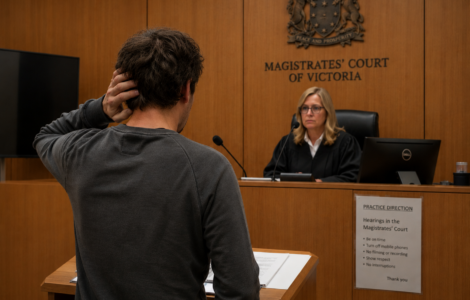
These matters are usually dealt with in the Magistrates’ Court, even though they are Crimes Act offences. They are often heard summarily, meaning without a jury.
That does not make them minor. The penalties are still serious, and the court treats them that way.
The prosecution will usually rely on police statements, body-worn camera footage, dashcam footage, and sometimes expert opinions about driving behaviour.
Understanding how traffic-related criminal matters move through court can help reduce uncertainty. A general guide is available here:
Key Defences to Consider
There are real defences to this charge. It is not a case of “if police say it happened, you’re guilty”.
Common defence issues include whether a proper direction to stop was given, whether you knew or should have known about it, and whether police were actually pursuing you.
Another major issue is the driving itself. The prosecution must prove the driving was dangerous or negligent to the required legal standard. Panic, confusion, or brief poor decisions do not automatically meet that test.
The circumstances matter. Speed alone does not decide the case. Nor does distance travelled. Context is critical.
These cases often turn on detail. That is why early advice matters before assumptions are made or admissions are locked in.
Why Legal Advice Matters
This charge carries real risk. Jail is possible. Licence loss is mandatory. Vehicle impoundment is on the table.
At the same time, not every case ends badly. Outcomes vary widely depending on how serious the driving actually was and how the case is handled.
A lawyer cannot change what happened. But they can test whether the charge fits the conduct, challenge weak parts of the prosecution case, and help shape the outcome.
This includes advice about whether to contest the charge, negotiate alternatives, or prepare a plea that properly explains what happened and limits the damage.
If other driving offences are involved, these pages may also help: Click here.
Charged With Dangerous or Negligent Driving While Being Pursued?
If you are facing a charge under section 319AA, this is not something to ignore or rush through.
The decisions you make early can affect your freedom, your licence, and whether your car is taken.
Getting clear advice early can help you understand how serious your situation really is and what your realistic options are.
You can contact William Archer Defence Lawyers here: Contact Us
The aim is not to promise miracles. It is to give you clarity, control, and a plan in a situation where most people feel they have lost all three.
Other Blogs

-
 Repeat Drink Driving Offence – Is There Any Hope in Court?
If you’ve been caught drink driving again, it can feel like the ground has dropped out from under you. Most people at this point aren’t asking about fines. They’re thinking: “It’s over.”“They won’t go easy on me this time.”“I’m going to jail.” That sense of hopelessness is common. And it’s understandable. But here’s the truth, based […]
 August 10, 2026Read more
-
Should I Represent Myself in Court?
At the outset, the reader may find it ironic to find this article published on a Law Firms website that charges for professional services. However, what follows is, so to speak, the truth, the whole truth and nothing but the truth when it comes to the decision to represent yourself in court. It doesn’t matter […]
Michael Sunderland
May 11, 2026Read more -
First Time Drink Driving Charge in Victoria – What You Need to Know
If you’ve been caught drink driving in Victoria for the first time, you’re probably feeling rattled. Most people in this position are thinking the same things: “Am I going to court?”“Do I lose my licence straight away?”“Will this ruin my job or future?” That reaction is normal. A first time drink driving charge in Victoria is serious. But it […]
Amalia Vicze
May 8, 2026Read more -
How to Get Your Licence Back After Being Caught and Disqualified in Victoria
You cannot just start driving when your disqualification period ends. Once a court cancels your licence, it is completely void. You must officially apply to VicRoads to get a new licence. Depending on your offence, you might also have to go back to the Magistrates’ Court first to get a “licence eligibility order”. Over 90% […]
Amalia Vicze
April 15, 2026Read more -
What Happens After a DUI Charge in Victoria – Step-by-Step Timeline
If you’ve just been charged with a DUI or drink driving offence in Victoria, the waiting is often the worst part. Most people leave the police stop or station thinking: “What happens now?”“Have I already lost my licence?”“When do I go to court?”“What am I meant to do before then?” This page walks through what usually happens […]
Amalia Vicze
April 14, 2026Read more

 August 10, 2026