Failing in the Duty of a Driver After an Accident – s61 Explained
 Mar 25, 2026
 Amalia Vicze & Michael Sunderland

If you’ve been charged with failing in the duty of a driver after an accident, most people are rattled. Many didn’t think what happened even counted as an “accident”. Others panicked at the scene and left, thinking they’d sort it out later. Some genuinely didn’t realise they were required to report it.
Now there’s a charge, talk of court, and fear about losing a licence or worse.
This offence catches ordinary people every day. It ranges from very minor situations to extremely serious ones. What matters is understanding what section 61 actually requires, how serious your specific situation is, and what usually happens next.
This page explains that in plain terms, based on how these cases actually play out in Victorian courts.
What Does Section 61 of the Road Safety Act Require?
Section 61 of the Road Safety Act sets out the legal duties a driver has if an accident occurs. These duties apply the moment an accident happens. They are not optional, and they apply even if the accident feels minor.
If you are driving a motor vehicle and an accident occurs because of that vehicle, and someone is injured or property is damaged, the law requires you to do three main things.
First, you must stop your vehicle. That means stopping as soon as it is safe to do so. Driving off, even briefly, can create problems.
Second, you must provide assistance if it is necessary and possible. This usually means checking whether anyone is hurt and calling for help if needed.
Third, you must provide your details. This includes your name, address, the owner’s details, and the vehicle’s registration number. If police are not present, you may also need to attend a police station and report the accident.
Many people are surprised by how strict this is. The law does not care whether the damage is small, whether you think the other person will care, or whether you plan to come back later. The duty applies immediately.
When Do These Duties Apply?
Section 61 applies in more situations than most people expect.
It applies if any person is injured, even slightly. It applies if an animal is injured or killed. It applies if property is damaged, including vehicles, fences, poles, or buildings.
It also applies even if no one else is present. If you hit a parked car and the owner is not there, you are still required to stop and report the accident to police as soon as possible.
If someone is injured and police are not at the scene, you must attend a police station and report what happened. If property is damaged and the owner is not present, the same obligation applies.
A common misunderstanding is thinking that leaving a note is enough. It is not. The law requires reporting to police in those situations.
Common Situations Where This Charge Arises
Most section 61 charges are not dramatic hit-and-run cases. They usually come from very ordinary scenarios.
One of the most common is a shopping centre or supermarket car park. A driver clips another car, sees a scratch or dent, panics, and leaves without exchanging details. CCTV later identifies the vehicle.
Another common situation is hitting a parked car on the street and assuming the damage is minor or will not be noticed.
Collisions with animals also feature, particularly in regional areas. Drivers sometimes assume that hitting an animal does not trigger reporting obligations. In many cases, it does.
There are also situations where drivers genuinely do not realise an accident occurred. Low-speed contact, poor visibility, or noise masking can all be relevant. These cases often turn on what the driver knew or reasonably should have known at the time.
Penalties for Failing in the Duty of a Driver
The penalties for this offence vary widely. The law treats the offence very differently depending on what happened in the accident and what the driver did afterward.
At the most serious end, if a person is killed or suffers serious injury and the driver knew or should reasonably have known this, failing to stop and render assistance can carry a maximum penalty of up to 10 years’ imprisonment. These are rare but very serious cases.
If a person is killed or seriously injured and the driver stopped but failed to provide required information, or if the injuries were less severe, the penalties are lower but still serious. For a first offence, this can include imprisonment of up to 8 months. For a subsequent offence, it can be up to 2 years.
If no one is injured and the accident only involves property damage, the offence is much less serious. The maximum penalties are relatively small, often involving fines and, in some cases, very short terms of imprisonment. In practice, jail is extremely rare in these lower-level cases.
The key point is that not all section 61 charges are equal. The facts matter enormously.
Impact on Your Driver’s Licence
Licence loss is one of the biggest concerns for people charged under section 61.
If an accident results in death or serious injury, the law requires the court to cancel the driver’s licence and impose long disqualification periods. For a first offence, this can be at least four years if a conviction is recorded. For subsequent offences, the periods are even longer.
If there is no death or serious injury, licence loss is discretionary. That means the magistrate decides whether to suspend or cancel your licence and for how long.
In practice, even for lower-level cases like car park accidents, magistrates often do interfere with licences. They see these offences as involving responsibility and accountability. That does not mean licence loss is automatic, but it is a real risk.
Whether a conviction is recorded can also affect licence outcomes and future consequences. This is an important part of how these cases are handled.
Do You Have a Defence?
Many people charged under section 61 do have a defence, or at least a partial defence that can significantly change the outcome.
One of the most common issues is knowledge. The prosecution must prove that you knew, or reasonably should have known, that an accident occurred. If you genuinely did not know and there is evidence to support that, this can be a strong defence.
Mistake of fact can also apply. If you honestly and reasonably believed no accident had occurred, or that no damage was caused, that belief may be relevant.
In some cases, drivers do report the accident later, but not immediately. While this does not automatically excuse the offence, it can significantly reduce its seriousness and the penalty.
Every case turns on its own facts. Early legal advice is important before making admissions or assumptions about guilt.
What to Expect in Court
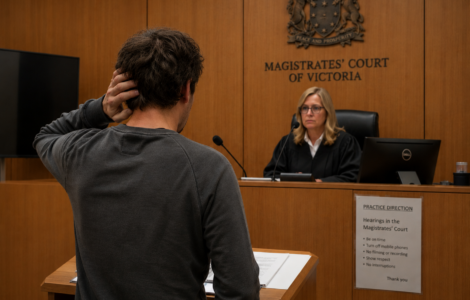
Failing in the duty of a driver cases are heard in the Magistrates’ Court.
The prosecution usually relies on evidence such as CCTV footage, witness statements, vehicle damage reports, and sometimes admissions made by the driver.
For first-time offenders involving property damage only, outcomes are often fines and, sometimes, short licence suspensions. Jail is very uncommon in these cases.
Where injuries are involved, or where the conduct after the accident was particularly poor, penalties increase. Each case is assessed individually.
Understanding the court process can help reduce anxiety. A general overview of how traffic matters proceed can be found here: What Happens in Court for Driving Offences in Victoria? (Step-by-Step Guide)
Reducing Penalties if You Are Pleading Guilty
If you decide to plead guilty, there is still a lot that can be done to reduce the impact.
Courts look closely at what you did after the incident. Making contact with the other party, paying for damage, writing a genuine letter of apology, and showing insight into what went wrong all matter.
An early plea is usually taken into account. Character references that address the offence properly, not just general good character, can also help.
If panic or stress played a role, that can sometimes be explained, though it does not excuse the behaviour. The goal is to show the court that this is not likely to happen again.
Get Legal Help From Traffic Offence Experts
Section 61 offences look simple on the surface, but the consequences can be significant, especially for licences. Many people underestimate them and go to court unprepared.
A lawyer cannot change what happened, but they can help you understand whether the charge is made out, whether a defence applies, and how to minimise the damage.
If related offences are involved, such as careless driving or licence issues, these pages may also help: Careless Driving and Driving While Suspended.
Book a Consultation – Don’t Go to Court Alone
If you’ve been charged with failing in the duty of a driver after an accident, getting advice early can make a real difference. What you do now can affect your licence, your record, and your future.
The aim is not to scare you. It’s to help you understand where you stand and what your options really are before you walk into court.
Other Blogs

-
 Repeat Drink Driving Offence – Is There Any Hope in Court?
If you’ve been caught drink driving again, it can feel like the ground has dropped out from under you. Most people at this point aren’t asking about fines. They’re thinking: “It’s over.”“They won’t go easy on me this time.”“I’m going to jail.” That sense of hopelessness is common. And it’s understandable. But here’s the truth, based […]
 August 10, 2026Read more
-
Should I Represent Myself in Court?
At the outset, the reader may find it ironic to find this article published on a Law Firms website that charges for professional services. However, what follows is, so to speak, the truth, the whole truth and nothing but the truth when it comes to the decision to represent yourself in court. It doesn’t matter […]
Michael Sunderland
May 11, 2026Read more -
First Time Drink Driving Charge in Victoria – What You Need to Know
If you’ve been caught drink driving in Victoria for the first time, you’re probably feeling rattled. Most people in this position are thinking the same things: “Am I going to court?”“Do I lose my licence straight away?”“Will this ruin my job or future?” That reaction is normal. A first time drink driving charge in Victoria is serious. But it […]
Amalia Vicze
May 8, 2026Read more -
How to Get Your Licence Back After Being Caught and Disqualified in Victoria
You cannot just start driving when your disqualification period ends. Once a court cancels your licence, it is completely void. You must officially apply to VicRoads to get a new licence. Depending on your offence, you might also have to go back to the Magistrates’ Court first to get a “licence eligibility order”. Over 90% […]
Amalia Vicze
April 15, 2026Read more -
What Happens After a DUI Charge in Victoria – Step-by-Step Timeline
If you’ve just been charged with a DUI or drink driving offence in Victoria, the waiting is often the worst part. Most people leave the police stop or station thinking: “What happens now?”“Have I already lost my licence?”“When do I go to court?”“What am I meant to do before then?” This page walks through what usually happens […]
Amalia Vicze
April 14, 2026Read more

 August 10, 2026