



What Happens If I Refuse a Breath Test in Victoria?
 Dec 22, 2025
 Amalia Vicze & Michael Sunderland


Refusing a breath test in Victoria is treated seriously, often more seriously than returning a high reading.
This article explains what typically happens step by step after a refusal, how the matter progresses through court, and what factors influence the outcome.
Immediate Consequences After Refusing
Once a driver refuses a breath test, you will be released immediately, but that is not a good thing.
All refuse breath test cases end up in court, even if you had not been drinking.
The incident is documented in detail for court.
Will I Be Charged Automatically?
Yes. A refusal almost always results in a charge and summons in court.
However, the strength of that charge depends on:
- Whether the demand was lawfully made
- Whether the driver understood the requirement
- Whether police followed the correct process
- Whether the refusal was clear, deliberate, and unequivocal
These issues are rarely obvious at the roadside but become important later.
In most cases there will be body worn camera ( BWC) which helps us establish what happened.
What Happens With My Licence?
In many cases, refusing a breath test leads to:
- Immediate licence consequences, and
- A court-imposed licence cancellation of 2 years ( for the first offence) or 4 years ( for the second offence ) if found guilty or convicted.
The length of disqualification depends on:
- Whether this is a first offence
- Prior drink driving history
- Whether aggravating features are alleged
- The court’s assessment of risk and deterrence
Importantly, refusal offences always attract harsher licence cancellations than low-range drink driving, even where no alcohol reading is recorded.
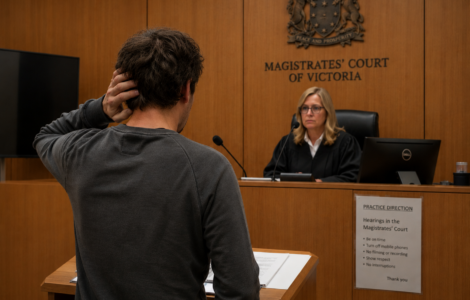
What Happens in Court?
A refusal matter usually proceeds as follows:
- A charge and summons and brief of evidence are served.
- These including:
- Witness statements
- Body-worn camera evidence (in many cases)
- We provide legal advice and a recommendation on what to do with your case.
- Decision whether to:
- Resolve the matter early, or
- Contest the charge
Refusal cases frequently involve technical arguments, particularly around:
- The wording of the police demand
- Whether the refusal was genuine or ambiguous
- Whether the driver was capable of complying
- Whether proper warnings were given
These matters are often more legally complex than standard drink driving cases.
Can a Refusal Be Defended?
Yes — but not simply by saying “I didn’t mean to refuse.”
Common defence themes include:
- Miscommunication
- Medical or physical incapacity
- Procedural errors by police
- Ambiguity in the alleged refusal
- Failure to comply with mandatory requirements
Each case turns heavily on the facts and the evidence, particularly body worn camera and witness statements.
How Magistrates Approach Refusal Cases
Magistrates typically view refusal as a deliberate attempt to avoid testing unless persuaded otherwise.
When sentencing, the court will consider:
- Prior traffic history
- Whether the refusal appears calculated
- The driver’s explanation
- Any demonstrated remorse or insight
- Impact of licence loss on employment or family
Well-prepared cases focus not only on the offence, but on context and credibility.
Minimum licence cancellation periods must be imposed by the court of either 2 or 4 years.
Is Refusing Worse Than Failing?
In many cases, yes.
A refusal:
- Removes objective alcohol readings
- Is often treated as intentional non-compliance
- Can attract longer disqualification periods
- May carry stronger deterrence considerations
That is why refusal cases require careful handling — assumptions made early can have long-term consequences.
What Should I Do If I’ve Been Charged?
If you have refused a breath test:
- Do not assume the case is straightforward
- Do not rely on roadside explanations alone
- Obtain advice early, before positions harden
Refusal matters are highly fact-specific, and early analysis often changes the strategic options available.
When to Speak to a Traffic Lawyer
You should obtain legal advice before your first court date if:
- You are facing licence cancellation
- You have prior drink driving matters
- Your employment depends on your licence
- You believe the refusal was misunderstood or mishandled
Early advice often determines whether a matter resolves quickly or escalates unnecessarily.
Speak With William Archer Defence Lawyers
William Archer Defence Lawyers regularly act in refusal cases across Victoria, including contested matters and plea hearings.
If you need advice about a refusal charge or upcoming court date, contact our office to discuss your options.
Other Blogs
-
 Should I Represent Myself in Court?
At the outset, the reader may find it ironic to find this article published on a Law Firms website that charges for professional services. However, what follows is, so to speak, the truth, the whole truth and nothing but the truth when it comes to the decision to represent yourself in court. It doesn’t matter […]
Michael Sunderland  May 11, 2026Read more
-
 First Time Drink Driving Charge in Victoria – What You Need to Know
If you’ve been caught drink driving in Victoria for the first time, you’re probably feeling rattled. Most people in this position are thinking the same things: “Am I going to court?”“Do I lose my licence straight away?”“Will this ruin my job or future?” That reaction is normal. A first time drink driving charge in Victoria is serious. But it […]
Amalia Vicze
May 8, 2026Read more -
 How to Get Your Licence Back After Being Caught and Disqualified in Victoria
You cannot just start driving when your disqualification period ends. Once a court cancels your licence, it is completely void. You must officially apply to VicRoads to get a new licence. Depending on your offence, you might also have to go back to the Magistrates’ Court first to get a “licence eligibility order”. Over 90% […]
Amalia Vicze
April 15, 2026Read more -
 What Happens After a DUI Charge in Victoria – Step-by-Step Timeline
If you’ve just been charged with a DUI or drink driving offence in Victoria, the waiting is often the worst part. Most people leave the police stop or station thinking: “What happens now?”“Have I already lost my licence?”“When do I go to court?”“What am I meant to do before then?” This page walks through what usually happens […]
Amalia Vicze
April 14, 2026Read more -
 The Dangers of AI and The Law
Since the introduction of AI Large Language Models (LLMs) in the early 2020s, people have increasingly relied on AI platforms such as ChatGPT and Google Gemini to assist with day-to-day tasks, from drafting emails to summarising complex information. By 2026, it is widely understood that while these tools are powerful, they are not infallible. One […]
Michael Sunderland
April 10, 2026Read more